
Introduction
As part of the OrganicYieldsUP project, partners from 11 European countries are undertaking a codesign process for strategies to improve the productivity and yield stability of organic farming systems across Europe. This process includes cross-visits: trips oriented to foster exchange and cross-fertilization between peers from different countries.
One of these cross-visits took place in the Rhône Valley from May 11 to 14, 2026, bringing together professionals from Southwest France, North-Central Italy, and Catalonia, as well as the project's respective partners: ITAB, the University of Barcelona, the University of Pisa, the Sant'Anna School of Advanced Studies, and EcorNaturaSì.
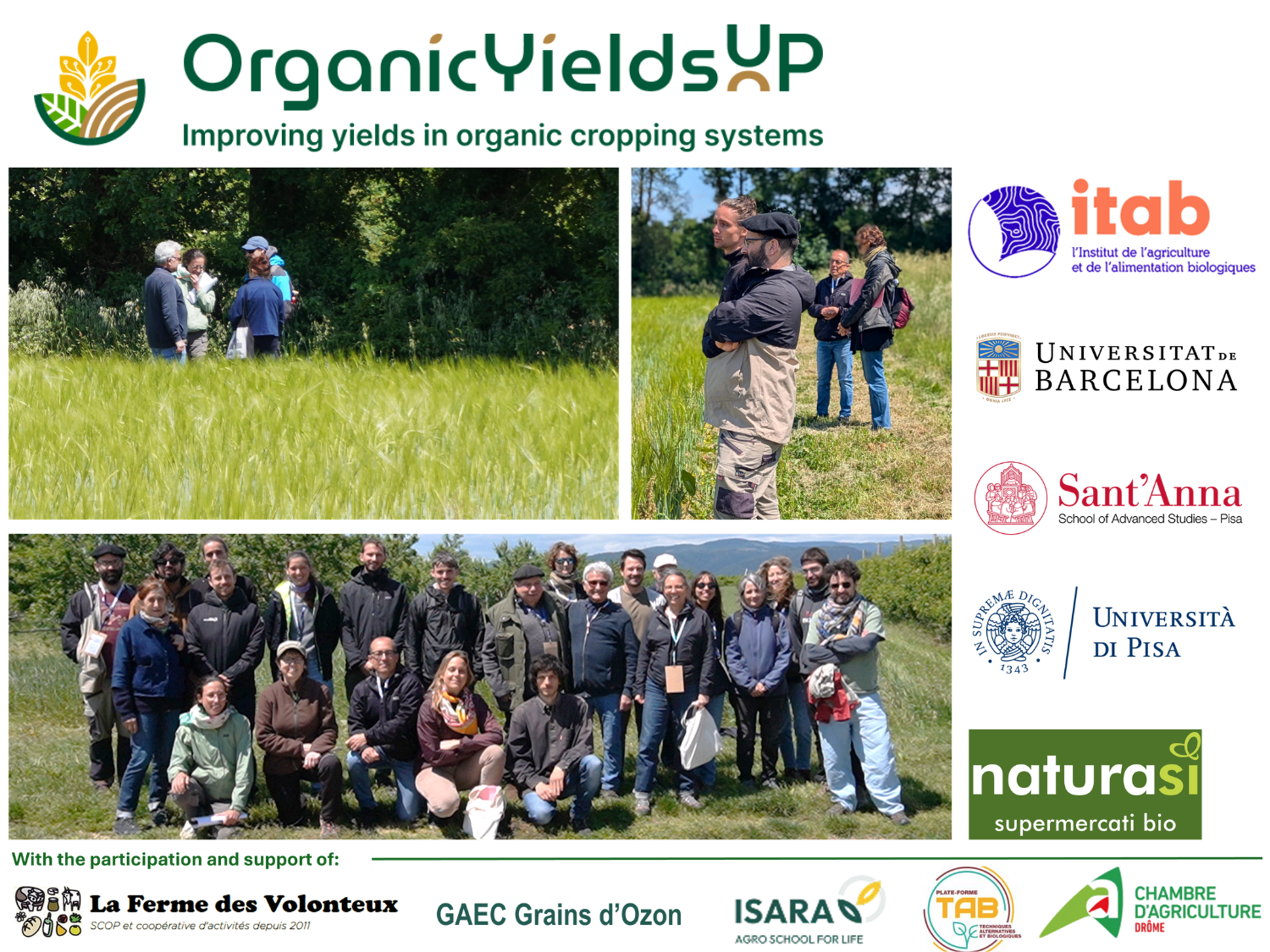
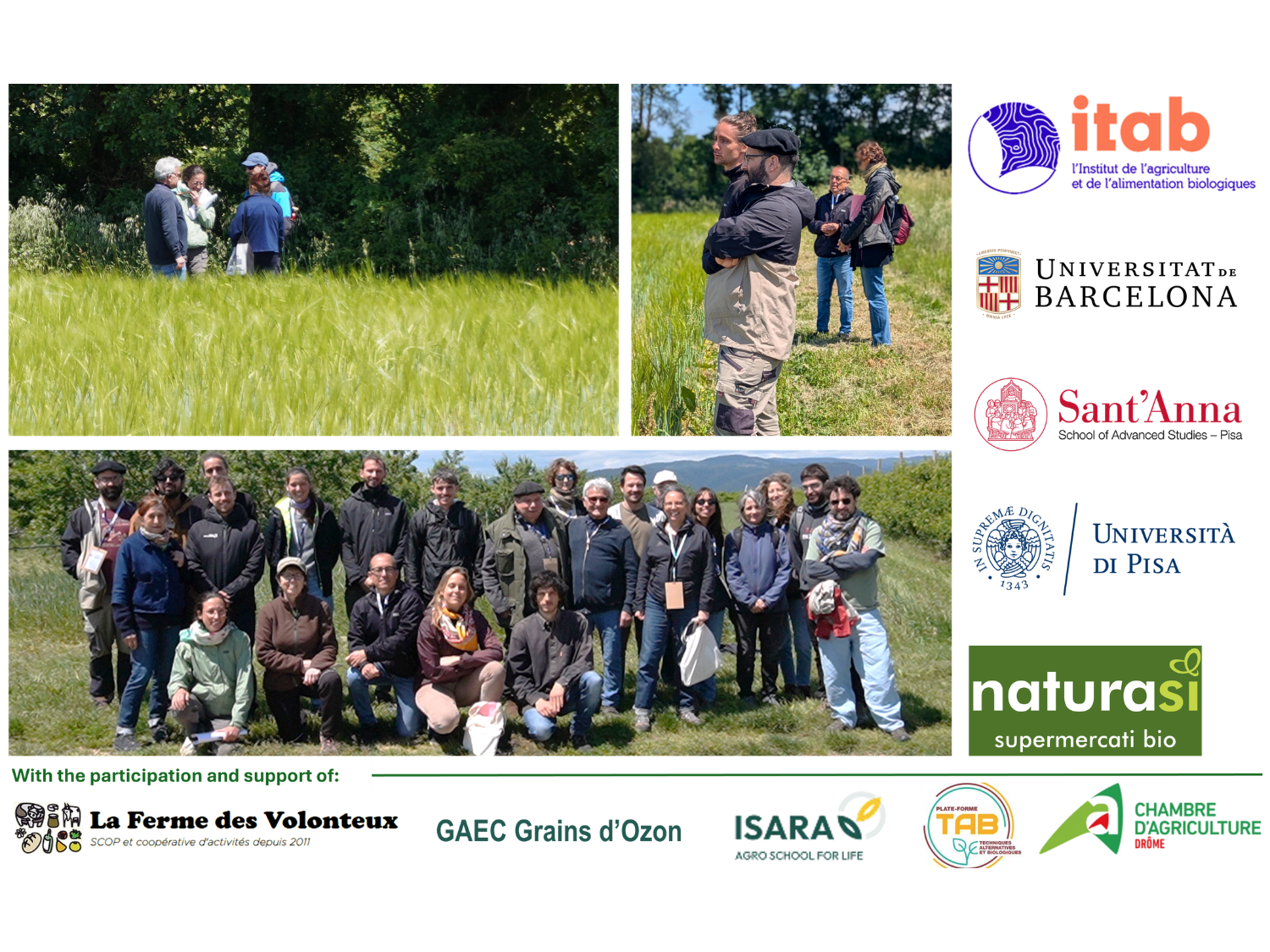
Over four days, 23 professionals, including 7 French, 10 Italians, and 6 Catalans, gathered to visit farms and system experiments in different pedoclimatic contexts in southeastern France. The group comprised producers, advisors, industry representatives, public authorities, and project researchers (Figure 1).
At the start of the event, participants were presented with the hypothesis that the transition to improved productivity, stability, and sustainability of organic farming systems involves:
- an agronomic dimension, focusing on technical aspects;
- a socio-organizational dimension, focusing, for example, on the value chain;
- a dimension related to innovation, knowledge, and skills.
The visits described below were conducted with this perspective in mind, maintaining a critical eye on these three dimensions.
The cross-visit of the South cluster: highlights
Visit 1 - Ferme des Volonteux : diversification of activities and collective organisation
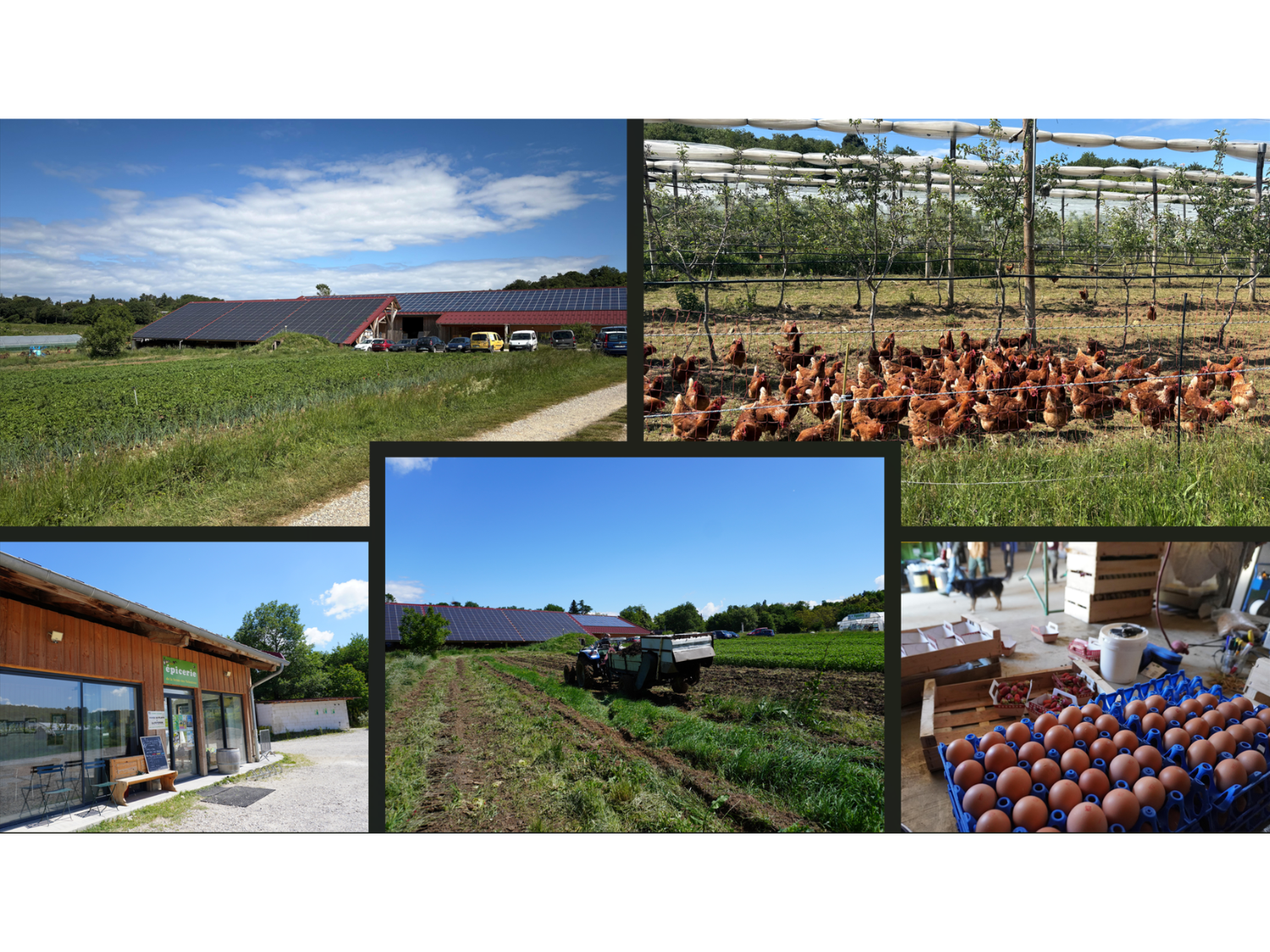
La Ferme des Volonteux is a 30-hectare organic farm established in 2011 near Valence. It combines highly diversified production, direct sales, and cooperative management (Figure 2)
Its activities include market gardening, orchards, legumes, sunflowers, cereals, as well as raising sheep and laying hens, and beekeeping.
The farm cultivates and saves seeds from a dynamic mixture of 11 wheat varieties, which are processed on-site into flour and bread.
Solar panels power an electric tractor, and some of the machinery is manufactured on-site with the help of an association, contributing to the farm's self-sufficiency.
The most striking feature of the farm is its collective organization: 10 partners and 15 employees share technical, financial, material, and human resources, with equal compensation and governance based on a rotation of responsibilities and participatory decision-making, supported by bi-monthly steering committee meetings and seminars twice a year.
Visit 2 - Les grains d’Ozon : crop diversification and tillage reduction
Les Grains d’Ozon is a 220-hectare joint farming operation (GAEC) in the peri-urban area of Lyon, which has been cultivating organic grain crops since 2004.
Good access to irrigation allows for the production of maize and, above all, soybeans, which constitute the farm's main source of income. One-third of the maize and soybean production is for human consumption, with the remaining two-thirds sold for animal feed.
Soil fertility is maintained through crop rotation and exchanges with neighbouring livestock farmers, calculated according to the principle of 1 ton of straw for every 3 tons of manure.
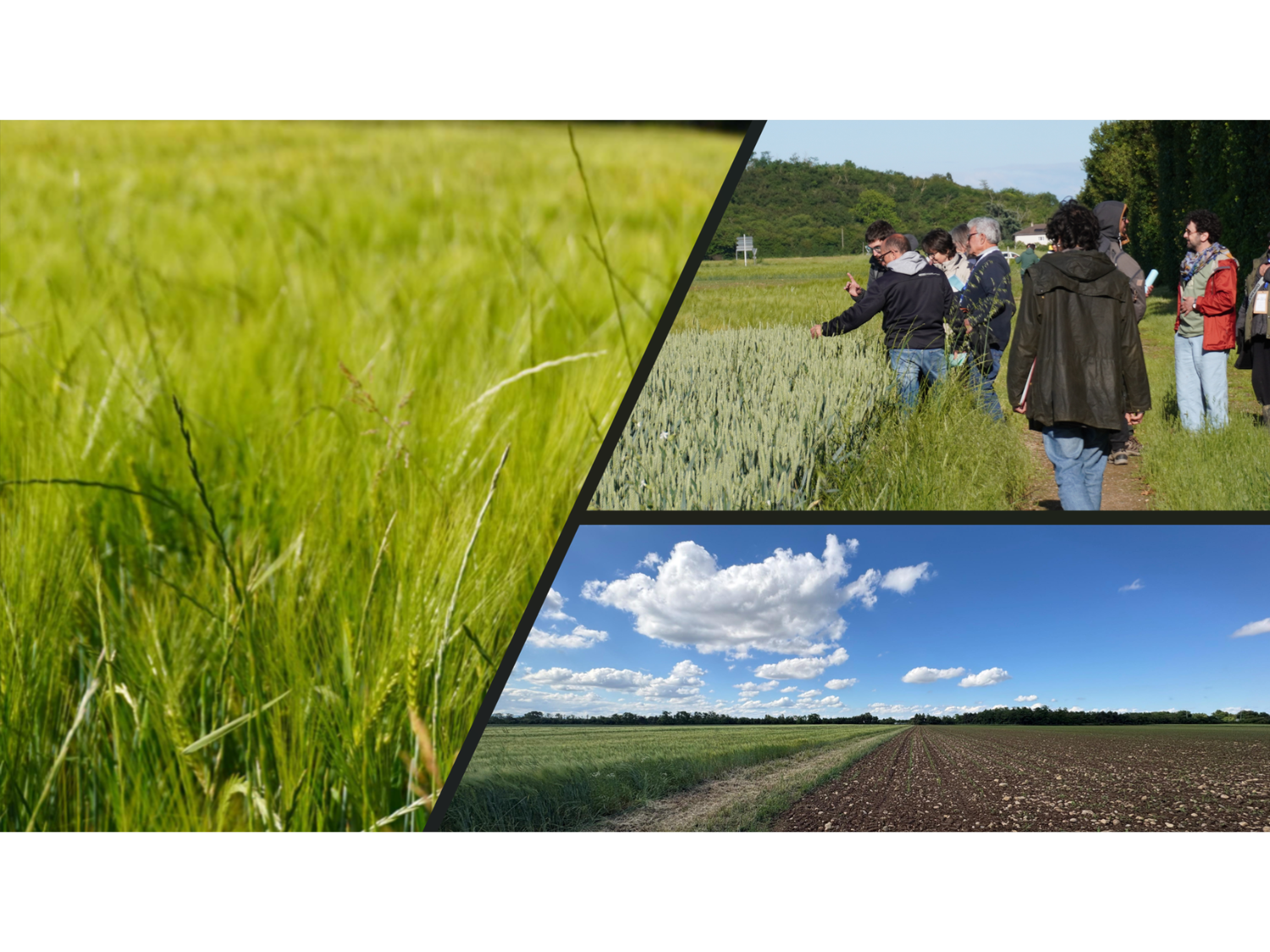
For the past 14 years, the farm has hosted the Corbas long-term system trial, designed in collaboration with ISARA in Lyon (Figure 3). On a 3-hectare field divided into four strips, this trial compares two organic cropping systems and their multi-performance indicators:
- a "diversity system" with an 8-year rotation
- a "fertility system" with a 4-year rotation that excludes tillage.
Although it is not possible to make a clear recommendation in favour of one system or the other, this experience has yielded valuable lessons. The introduction of new crops, tested in the "diversity system," and the improvement of soil management and weed control practices, tested in the "fertility system," are now standard practices on the farm.
Visit 3 - Ferme expérimentale d’Etoile-sur-Rhône : agroforestry and landscape diversification
The Étoile-sur-Rhône Experimental Farm is managed by an association of 12 agricultural research and development (R&D) partners, under the lead of the Chamber of Agriculture of the Drôme department.
The farm hosts the TAB (Alternative and Biological Techniques) platform, which informs local organic farming stakeholders about the concrete effects of practices, particularly through trials focusing on varieties, irrigation, and agroforestry.
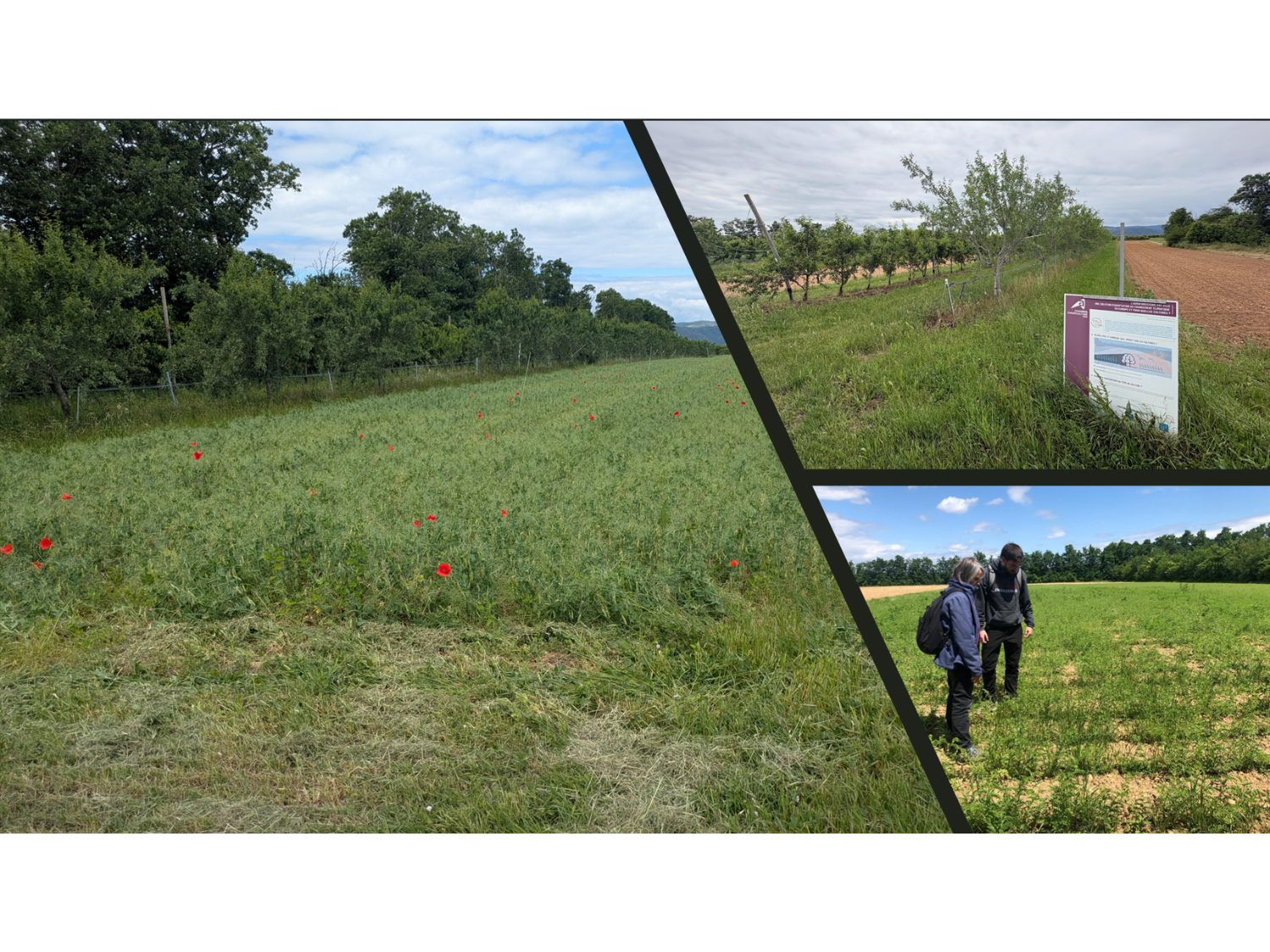
The agroforestry system trial alternates strips of arable crops with rows of peach and almond orchards, as well as windbreaks around the experimental plot (Figure 4). The multi-performance assessment is conducted in comparison to a plot without agroforestry using the same crop rotation.
While the agroforestry system has demonstrated undeniable advantages in reducing evapotranspiration, it has not significantly improved pest control.
These results, highlighting the complexity of ecological processes, sparked considerable discussion within the group. An initial sense of disappointment stemmed from the failure to improve pest management through increased biodiversity. However, the discussion then shifted to how to embrace the complexity of ecological systems and, consequently, redefine priorities regarding crop and landscape diversification.
The key takeaway was that promoting diversification to farmers as a solution to pest problems is indeed simplistic. Rather, it is about supporting, as a society, diversification as a desirable transformation, thereby empowering farmers to work towards this goal.
Value chain experiences shared from participants
To illustrate how cooperation and supply chain organization can promote the economic resilience of organic farming systems, and thus innovation and diversification, participants presented innovative initiatives in organic supply chains from their respective regions:
- The Catalan ecological project Singulars, which aims to connect more than 1,000 producers with local retailers through fair pricing mechanisms;
- The Catalan cooperative Eco Artesa, specializing in heritage grains and legumes for institutional catering, and emphasizing fair prices;
- The Italian organic distribution group EcorNaturaSì, with its advantageous contractual policy and technical advice;
- The French cooperative L’Odyssée d’Engrain, which processes and markets heritage grain varieties progressively improved by its producers through participatory breeding.
These presentations highlighted the diversity of approaches that can lead to the organization of a supply chain, and the opportunities of both short and longer supply chains. This range of organizational forms, and its diversity, can play a significant role in supporting more productive and sustainable organic farming systems.
Reflective Workshop
During the closing workshop, participants grouped themselves by country and discussed the main lessons learned from the visits and exchanges. Below, we present a summary of these lessons in relation to the three pillars previously identified as the framework for the event: agronomy, organization, and knowledge (Figure 5).
Agronomy
Participants shared the observation that diversification practices such as crop rotation, intercropping, agroforestry, and crop-livestock integration are essential for sustainable organic agriculture.
However, although these practices are well-known, constraints related to market access, inconsistent agricultural yields, and reduced opportunities due to climate change encourage oversimplification of farming systems.
The obstacles to greater diversification of farming systems cannot be overcome by purely technical solutions; they must be understood as the result of socio-technical constraints.
Organization
Collective dynamics and the diversity of French institutions stand out for their strong impact on market strategies, the diversity of collective structures, and the close collaboration between farmers, collectors or processors, consumers, and public institutions. Acting collectively facilitates access to larger processing capacities and more diversified production on farms.
Participants recognized collective action as a lever for the performance of organic systems. They emphasized that stable market outlets, consumer awareness of the benefits of organic farming, and cooperation are essential to supporting innovation and diversification in this sector.
Proximity to markets and cooperation with businesses are therefore important to guarantee more stable outlets, increased and shared added value, and an equitable sharing of risks: three essential conditions for innovation.
Knowledge
The TAB platform and the Corbas experience both challenged our habit of expecting linear consequences from any change in practices. They underlined the importance of considering the entire context, including biophysical, social, and economic frameworks, before developing strategies and providing advice.
Discussions highlighted the need to combine applied and basic research in hybrid approaches. The system trial approach, explored in Corbas and Etoile-sur-Rhône, goes in this direction. In fact, system trials aim to develop combinations of practices relevant to commercial farms, and monitor their multiple performance.
Rather than simply providing technical solutions to problems, these approaches foster collective learning and adaptation, thereby enabling the understanding and management of complex agricultural systems and their multiple performances in real-world situations.
.png)
Initial reflections on the lessons learned
The cross-visit of the Southern cluster is just one step in a longer methodological process. However, this experience highlights some initial key messages, presented below.
What happened during the cross-visit?
The event brought together a diverse and multinational group of professionals to address the extremely broad question of how to improve "the yields and stability of organic cropping systems." Faced with this question, and the realities of production and experimentation visited, the core of the discussions focused on redefining priorities. It appears necessary to clarify that the primary concern of producers and supply chains is not the yield of cropping systems, but the profitability of production systems.
Improving organic crop yields: what type of strategy should be pursued?
No relevant strategy can be limited to simple technical solutions. The three dimensions explored during the cross-visit are closely interconnected. While agronomy can improve productivity, knowledge will make it possible, and organization will ensure that profitability is maintained or improved. Strategies to improve organic productivity will necessarily be integrated and multidimlensional.
What will be the content of the strategies?
Any strategy must address complex mechanisms and systems, for which there will be no magic solution. Whether it involves agronomic techniques, supply chain organization, or knowledge production, the key is not to find solutions to problems, but to strengthen adaptive capacities.
What role will Research and Development play in strengthening adaptive capacities?
For Research and Development, the priority is not just about telling farmers which decision is best to make, but rather about helping all relevant stakeholders determine the best way to make decisions. Only a systemic approach will allow successful alternative food systems to thrive.
These considerations, seemingly abstract at first glance, are often mentioned as contextual elements for technological innovation. Upon returning from this cross-visit, they appear to us rather as the necessary starting point for any strategy.
Authors:
Ambrogio COSTANZO, Nathan BASCHENIS, Eva LACARCE (ITAB), Jaime VILA TRAVER (University of Barcelona)
Correspondence: ambrogio.costanzo@itab.asso.fr


